What is the most cost efficiency myinvois compliance solution? Direct Build vs Middleware vs MyInvois Portal
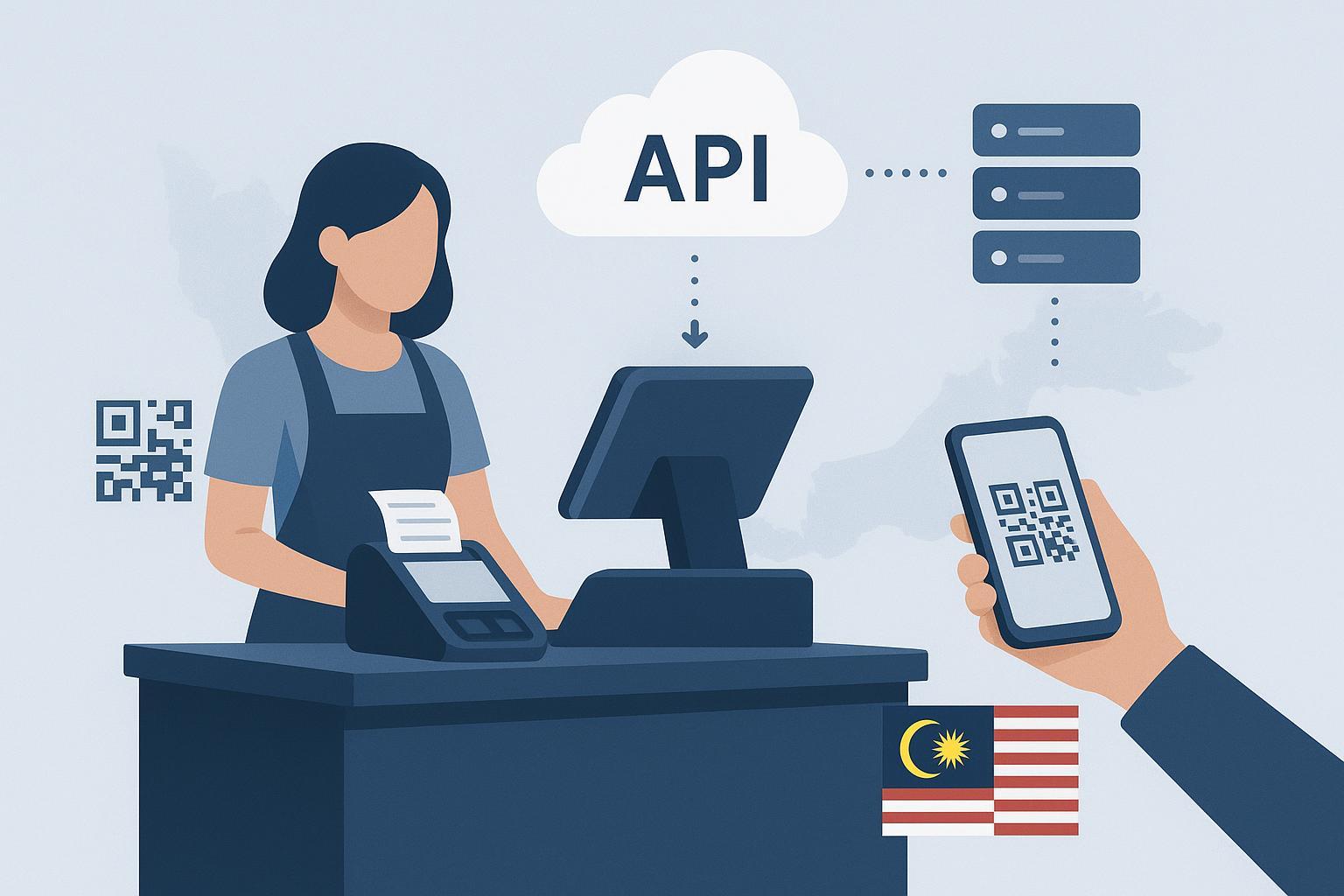
Hybrid retail SMEs in Malaysia—especially those running on‑premise POS in stores plus online channels—need a practical path to e‑invoicing with MyInvois. You have three realistic options: build a direct POS‑to‑API integration, use a middleware provider, or operate through the free MyInvois Portal (manual or bulk upload). This comparison uses a TCO lens and looks at checkout latency, upgrade cadence, and maintenance so you can decide with confidence.
Author: A retail systems integration adviser who has shipped CTC‑style tax integrations and POS rollouts.
How MyInvois connects to POS
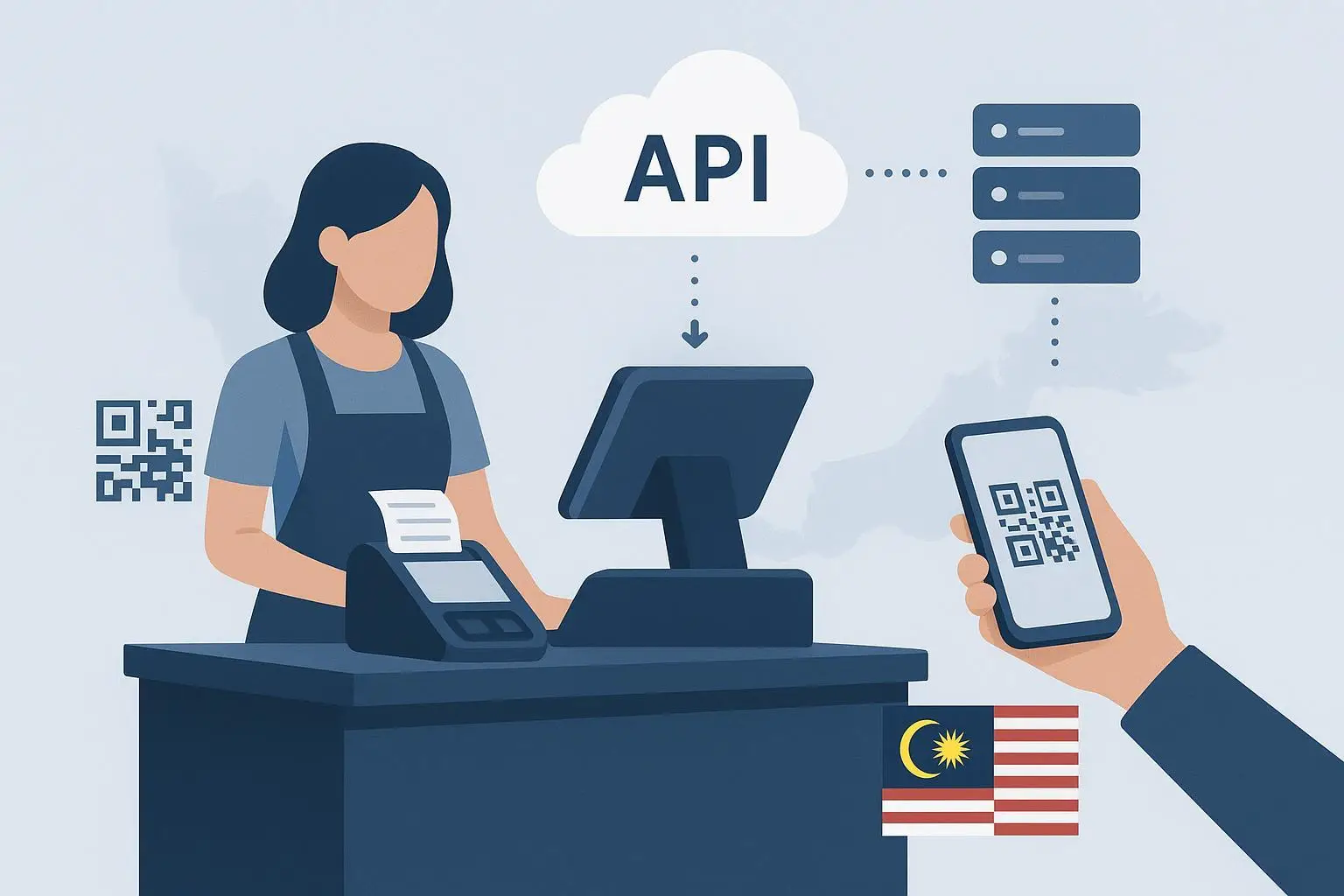
Malaysia’s MyInvois provides two official channels: the MyInvois Portal (web) and the System API. There isn’t a separate e‑POS channel—the same API applies to POS, ERP, and accounting integrations. IRBM’s SDK lays out OAuth2 login, submission, and status/polling flows, and confirms UBL 2.1 as the data model in JSON or XML. See the SDK’s overview and FAQ as well as the Submit Documents reference for endpoints and payload expectations, and the portal overview for the web path: IRBM’s SDK FAQ and overview explain the model and data format, while the Submit Documents page shows the request/response pattern; the portal overview covers manual and bulk entry.
IRBM requires that, after validation, each e‑Invoice receives a unique identifier and a QR verification link that sellers must make available to buyers. The General and Specific Guidelines (v4.6) also define correction windows: buyer rejections and supplier cancellations are only allowed within 72 hours from validation; after that, adjustments happen via credit/debit/refund notes referencing the original document. Contingencies exist for outages too. IRBM’s General FAQs state that if IRBM’s system is down, suppliers get 72 hours after service restoration to issue/submit the e‑Invoices—reinforcing an architecture where the POS keeps selling and reconciles later.
For B2C retail, IRBM allows consolidated e‑Invoices in defined situations. If buyers typically don’t request e‑Invoices, you may aggregate receipts (such as daily) into one e‑Invoice—provided totals and references match, and subject to payload limits. If a buyer asks for an e‑Invoice at checkout, that transaction must be issued individually.
TCO comparison: MyInvois API integration for POS options at a glance
The matrix below summarizes the three approaches for hybrid, on‑premise POS environments.
Option | Upfront development | Implementation time | Recurring cost | Maintenance burden | Upgrade cadence risk | Checkout latency impact | Best for |
|---|---|---|---|---|---|---|---|
Direct POS–MyInvois API build | High: data mapping to UBL 2.1, auth, submit/poll, rejection/cancellation flows, QR storage | Medium–long (project, testing, certification) | Low: no vendor per‑invoice fees; infra + certificate costs | High: in‑house monitoring of IRBM changes, patches, cert rotation | Higher (you own tracking/guideline updates) | Low if you implement async queue; risky if you block checkout | Mid/high volume with strong in‑house dev seeking fee avoidance |
Middleware provider integration | Low–medium: connector setup, mappings, testing | Short (weeks), faster time‑to‑value | Medium: subscription and/or per‑invoice fees | Low–medium: vendor handles schema/version changes | Lower (updates amortized across clients) | Low: established queuing/batching and retries | Multi‑branch rollouts, risk‑averse teams, faster deployments |
MyInvois Portal (manual/bulk) | None: web use and CSV templates | Immediate for manual; days for bulk SOPs | None for software; staff time cost | Low technical; higher operational workload | Low (IRBM maintains the portal) | Not for live checkout; use end‑of‑day consolidation | Low‑volume or transitional compliance |
Option 1: Direct POS–MyInvois API build
What it involves You’ll build an in‑house integration that maps POS data to UBL 2.1 (JSON/XML), performs OAuth2 authentication, submits e‑Invoices, polls for status, processes rejections/cancellations within the 72‑hour window, and stores the validation identifier and QR for buyer presentation. IRBM’s SDK materials describe the submit and status patterns and clarify the UBL 2.1 structure.
Pros and trade‑offs This path gives you maximum control over data, retries, and evidence storage while eliminating third‑party per‑invoice fees—attractive for high volumes. The trade‑off is significant upfront engineering and testing, plus ownership of upgrades when IRBM revises guidelines, code lists, or endpoints. You must also design robust queuing and offline SOPs so checkout never blocks on API clearance.
Who it’s for SMEs with capable in‑house engineering or a trusted POS vendor, stable volumes, and appetite to invest upfront in exchange for lower recurring costs.
Pricing notes You avoid vendor per‑invoice charges but should budget cloud/on‑prem infrastructure, certificates, monitoring, and change management. Many teams allocate 15–30% of initial build cost annually for maintenance when tax platforms evolve.
Option 2: Middleware provider integration
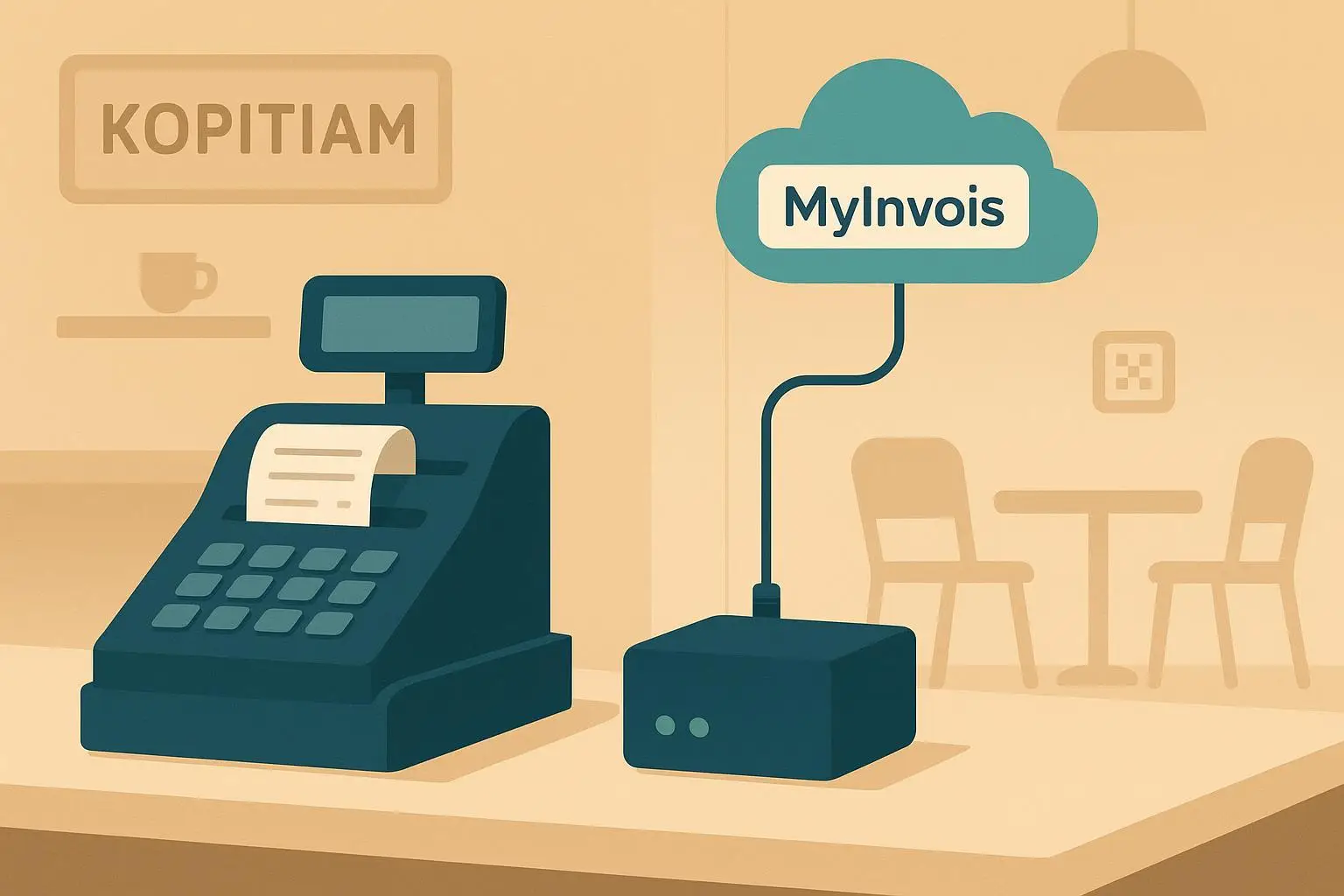
What it involves A middleware platform bridges your POS/ERP/accounting to the MyInvois API. It typically provides schema mapping, queuing/batching, monitoring, exception workflows, and audit trails, plus managed upgrades when IRBM changes specifications.
Pros and trade‑offs You get faster time‑to‑value with ready‑made connectors and support SLAs, and updates handled by the vendor—lowering compliance risk. In return, you accept recurring subscription and, in some cases, per‑invoice fees, as well as vendor dependence. You still need sound local SOPs for offline sales and reconciliations.
Who it’s for Branch‑heavy or resource‑constrained SMEs that prioritize speed, predictable SLAs, and risk‑adjusted TCO over pure cost minimization.
Pricing notes Public Malaysian references suggest implementation can range from RM0–RM60,000 depending on complexity, with subscriptions from roughly RM100/month up to enterprise tiers and per‑invoice fees around RM0.12–RM0.50 where applicable.
Option 3: MyInvois Portal (manual/bulk)
What it involves The official, free MyInvois Portal supports manual entry and bulk/CSV uploads. It’s a viable starting point and a long‑term option for low‑volume businesses; it’s not engineered for live checkout where QR must be printed or sent immediately.
Pros and trade‑offs You incur zero software cost and no engineering, and IRBM handles portal updates and validation. The trade‑off is manual work and higher error risk, which makes it unsuitable for continuous POS traffic. It can, however, support end‑of‑day consolidated e‑Invoices where permitted for B2C.
Who it’s for Micro‑SMEs or those in a transitional phase before investing in API or middleware automation.
Pricing notes The portal is free; your cost is staff time to key in or prep CSVs and to run reconciliation.
Checkout latency: avoid slow lines with async and contingency design
The safest pattern for MyInvois API integration for POS is to decouple checkout from clearance. Think of the POS like a cashier lane and the MyInvois API like a back office: you hand off the packet to a local, durable queue and let background workers handle submission and polling. When clearance succeeds, attach the IRBM validation link/QR to a digital receipt, email/SMS, or allow reprint on the next visit.
This approach aligns with two official realities. First, IRBM’s SDK documents asynchronous submission and status retrieval patterns; you’re not required to block the operational workflow while waiting for validation. Second, IRBM’s General FAQs grant a 72‑hour grace after IRBM outages, implying that stores should keep trading and reconcile once systems are available. For B2C lanes, you may issue consolidated e‑Invoices end‑of‑day where permitted; if a buyer requests an e‑Invoice on the spot, that transaction must be issued individually, which your queue can prioritize.
Engineering checklist for on‑premise POS
Local, durable queue with retry/backoff to smooth bursts and handle rate limits.
Background workers to submit and poll; evidence store for payloads, IRN/QR, and logs.
Offline mode that prints a standard receipt and flags the transaction for later e‑Invoice issuance, with reconciliation dashboards for store managers.
How to choose for your Business
Use this quick decision lens:
If you issue occasional receipts and can consolidate B2C sales, start with the MyInvois Portal and define a CSV SOP—then revisit automation when volumes rise.
If you have in‑house engineers or a strong POS vendor and want to minimize unit cost at scale, a direct API build can pay off—provided you invest in queues, monitoring, and a change‑management plan.
If you need speed, consistency across branches, and predictable upgrades, middleware offers the lowest risk‑adjusted path, even with subscription/transaction fees.
Best‑for picks by scenario
Low‑volume or transitional: MyInvois Portal (manual/bulk) with daily consolidation where allowed.
Mid/high volume with in‑house dev strength: Direct POS–MyInvois API build with robust async queueing.
Multi‑branch or risk‑averse rollouts: Middleware provider with SLAs, monitoring, and managed updates.
Also consider: middleware examples
Disclosure: AInvoiceX is our product. As a middleware‑type solution, AInvoiceX connects POS/ERP systems to MyInvois and similar e‑invoicing regimes, with emphasis on global tax compatibility and offline queueing for on‑premise stores. Learn more at the AInvoiceX homepage: https://www.ainvoicex.com/
Baiwang Co., Ltd. (HKEX: 06657.HK) is a Hong Kong–listed e‑invoicing and SaaS provider with international operations; its global/regulatory‑technology activities are presented through the group’s international pages. See Baiwang company profile (English) and the RegTECH / Baiwang Global overview for corporate background and coverage.
FAQ
Can my POS call the MyInvois API synchronously during checkout? You shouldn’t. IRBM’s SDK provides asynchronous submission and status patterns, and IRBM’s outage grace rules imply stores must keep trading even when validation isn’t instantly available. Use a durable queue and attach the QR after clearance.
How much does middleware cost per invoice in Malaysia? Public advisory ranges suggest RM0.12–RM0.50 per e‑Invoice, with monthly/annual subscriptions that scale by features and volume, and implementation fees from RM0 to tens of thousands of ringgit depending on complexity. Your RFPs should request concrete price ladders and SLA terms.
What should I do if MyInvois is down at checkout? Continue issuing receipts, then submit e‑Invoices within the grace period after service restoration. Your POS should flag affected transactions and your middleware/build should handle retries, reconciliation, and 72‑hour correction windows.
Appendix: sources and assumptions
Authoritative references used in this article include IRBM’s SDK FAQ and the Submit Documents reference, which describe channels (Portal vs API), UBL 2.1 payloads, and submit/status flows; IRBM’s General and Specific Guidelines v4.6 for validation outputs/QR, 72‑hour correction windows, and consolidation allowances; the General FAQs for the 72‑hour outage grace; and the MyInvois Portal overview for manual/bulk workflows. For Malaysian market pricing patterns, we used publicly available overviews indicating implementation ranges, subscription tiers, and per‑invoice estimates. TCO tables are illustrative planning tools with assumptions time‑boxed to early 2026; readers should validate with current IRBM materials and vendor proposals.
Selected links for verification:
IRBM SDK FAQ and overview: https://sdk.myinvois.hasil.gov.my/faq/
IRBM Submit Documents API reference: https://sdk.myinvois.hasil.gov.my/einvoicingapi/02-submit-documents/
IRBM General e‑Invoice Guideline v4.6 (PDF): https://www.hasil.gov.my/media/fzagbaj2/irbm-e-invoice-guideline.pdf
IRBM General FAQs (72‑hour outage): https://www.hasil.gov.my/media/0xqitc2t/lhdnm-e-invoice-general-faqs.pdf
MyInvois Portal overview: https://www.hasil.gov.my/en/e-invoice/myinvois-portal/
Middleware fee patterns (Malaysia overview): https://www.kiizen.com.my/e-invoicing-solutions-in-malaysia/